

Why CFOs Are Right to Be Cautious About AI and Intelligent Agents in Supply Chain Planning


As AI and intelligent agents move from experimentation to execution, a second voice is becoming increasingly important in the conversation: the CFO.
In Part 1 of this series, we explore Nvidia CEO Jensen Huang’s view that AI agents are not replacements for enterprise systems, but powerful tools that still require structure, boundaries, and human direction. That perspective resonates strongly with finance leaders, who are trained to look past hype and focus on exposure, accountability, and outcomes.
For CFOs, the question isn’t whether AI and agents belong in supply chain planning. It’s whether they can be trusted without human oversight.
AI Is Getting Faster. Financial Exposure Is Scaling with It.
Supply chain planning sits at the intersection of revenue, cost, working capital, and customer commitments.
Decisions made by planning systems directly affect:
- Revenue realization and missed shipments
- Inventory levels and cash flow
- Cost-to-serve and margin performance
- Contractual penalties and service-level risk
As intelligent agents take on more responsibility, forecasting demand, positioning inventory, and recommending supply actions, the speed of decision-making increases dramatically. So does the blast radius of mistakes.
From a CFO’s perspective, this isn’t a theoretical concern. It’s an operational reality.

The Real CFO Concern Isn’t AI. It’s Accountability.
Finance leaders don’t fear automation. They fear a lack of transparency.
When outcomes fall short of expectations, explanations matter to boards, auditors, regulators, and investors. “The agent decided” is not a defensible answer when millions of dollars in revenue, inventory, or customer commitments are at stake.
CFOs understand something many AI narratives gloss over: optimization without context is not decision-making.
Supply chain tradeoffs involve judgment calls about service versus margin, growth versus risk, and short-term results versus long-term resilience. These are business decisions that require human intent and ownership.
Unchecked autonomy doesn’t remove risk; it redistributes it often invisibly.
Why Human Oversight Is a Financial Control, not a Bottleneck
There’s a misconception that human oversight slows AI down. In reality, when systems are designed correctly, oversight makes AI safer, more scalable, and more valuable.
AI and agents excel at:
- Exploring a massive number of scenarios
- Processing complex constraints
- Surfacing probabilities and tradeoffs
Humans excel at:
- Defining financial priorities
- Setting risk tolerance and guardrails
- Choosing which tradeoffs align with strategy
- Owning results
The strongest systems don’t force a choice between speed and control. They combine both.
For CFOs, that combination isn’t optional; it’s a prerequisite.
What CFOs Should Expect from Agent-Enabled Supply Chain Planning
From a finance perspective, the goal of supply chain planning isn’t a single “optimal” answer. It’s visibility into:
- What could happen
- What’s likely to happen
- What financial risks are embedded in each option
Planning systems should expand decision intelligence, not collapse it into a black box. They should enable leaders to understand risk before it materializes on the balance sheet.
This is where many visions of fully autonomous agents fall short today. The prerequisites for trust: controls, explainability, boundaries, and human guidance, are still evolving.
CFOs know better than to bet the enterprise on immature autonomy.
This Is Where ketteQ Aligns with CFO Thinking
ketteQ was built with the understanding that supply chain planning is a high-impact, high-accountability function, one where financial consequences are immediate and measurable.
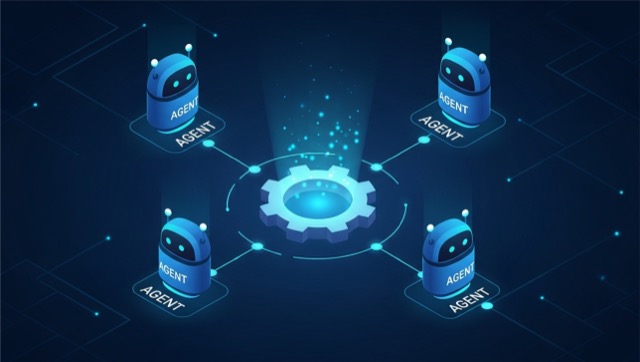
Instead of relying on a single deterministic plan, ketteQ’s PolymatiQ™ agentic AI engine uses intelligent digital agents to explore thousands of demand, supply, and inventory scenarios. These agents surface tradeoffs and probabilities, while humans remain responsible for setting objectives, adjusting constraints, and choosing paths that align with financial and operational priorities.
This model keeps accountability where CFOs expect it to be -- with people, not black boxes.
The CFO Takeaway
Technology doesn’t eliminate responsibility; it concentrates it.
As AI and intelligent agents become more embedded in supply chain planning, the organizations that succeed won’t be the ones chasing autonomy for its own sake. They’ll be the ones that combine AI’s speed and scale with human judgment, transparency, and financial accountability.
That balance isn’t conservative. It’s disciplined.
And its precisely how CFOs expect high-stakes systems to operate.
To explore how intelligent digital agents can support human-guided, financially accountable supply chain planning, visit ketteQ’s agent page.
A propos de l'auteur
Articles connexes

ketteCrew Spotlight: Embracing the Next Era of Planning with Ken Wardlaw
ketteCrew Spotlight: Embracing the Next Era of Planning with Ken Wardlaw