

The Super Bowl Isn’t Won on Paper and Neither Is Supply Chain Planning


When the Seattle Seahawks faced the New England Patriots in this year’s Super Bowl, millions of fans focused on the obvious: big plays, clutch moments, and the final score. But beneath the spectacle was something far more instructive for business leaders, especially those responsible for supply chain planning.
No team wins the Super Bowl by relying on a static game plan created weeks in advance. Success depends on continuous adaptation. Coaches adjust formations. Players react to shifting defenses. Data from every snap feeds decisions in real time. The best teams don’t just execute, they learn and adapt as the game unfolds.
That is exactly where modern supply chain planning is headed.
From Static Plans to Adaptive Playbooks
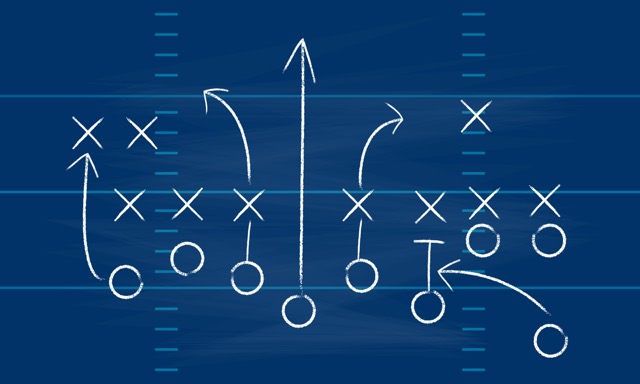
For many organizations, traditional supply chain planning still resembles an old-school football strategy: build a deterministic plan, lock it in, and hope reality cooperates. Forecasts are set. Inventory targets are approved. Execution teams are told to follow the plan.
But reality, like a football defense, rarely behaves as expected.
Demand spikes. Suppliers miss commitments. Transportation costs change overnight. Customer priorities shift mid-quarter. When that happens, static plans break—and organizations are forced into reactive firefighting.
Winning organizations across diverse industries are moving to a different model: adaptive, agent-led planning that behaves less like a playbook and more like a quarterback reading the field.
Agentic AI: The On-Field Decision-Maker
Agentic AI represents a fundamental shift in how planning decisions are made. Instead of a single monolithic optimization run, agentic systems deploy specialized AI agents that continuously sense, reason, experiment, and act.
Think of these agents as the players and coaches on the field:
- One agent monitors demand signals and customer behavior.
- Another evaluates supply constraints and supplier risk.
- Another runs scenario experiments to test possible responses.
- Another recommends or executes actions based on confidence thresholds.
Just like a quarterback adjusts the line of scrimmage, agentic AI adapts decisions in the moment, based on what is actually happening, not what was forecast weeks ago.
Why Augmentation Wins Championships
Even the best teams don’t replace their entire defensive line mid-season. They augment them with better coaching, better analytics, and better in-game awareness.
The same principle applies to supply chain technology.
Many organizations feel trapped by their existing APS or ERP investments in SAP, Oracle, Blue Yonder, Kinaxis, or o9. Replacing them feels like rebuilding the stadium instead of improving the team.
ketteQ takes a different approach.
Rather than ripping and replacing, ketteQ layers Intelligent Planning and CRM Agents on top of their existing systems. These agents operate across silos, continuously learning from real-time data and orchestrating decisions across demand, supply, inventory, and fulfillment.
The result? Measurable financial and operational value in weeks not years.

Planning as a Live Game, Not a Preseason Simulation
In the Super Bowl, no coach says, “Let’s wait until next quarter to adjust.” Decisions happen in real time. Sometimes between snaps.
Yet many supply chains still operate on monthly or weekly planning cycles.
ketteQ’s agent-led planning changes that rhythm. Powered by the PolymatiQ™ AI engine, ketteQ agents run multi-pass probabilistic experiments, test scenarios continuously, and refine recommendations as conditions change. Planning becomes a living system, one that adapts as fast as the business demands.
This is not about full autonomy overnight. Just like coaches retain final authority on key plays, humans remain in the loop. But instead of being overwhelmed by alerts and spreadsheets, planners are guided by AI agents that surface the best actions at the right moment.
The Competitive Edge Shows Up on the Scoreboard
In the Super Bowl, preparation matters, but adaptability wins.
The teams that adjust fastest exploit mismatches, manage risk, and capitalize on opportunities when they appear. Over four quarters, those micro-decisions compound into victory.
Supply chains work the same way.
Organizations using agentic planning powered by intelligent agents see improvements not just in efficiency, but in revenue, service levels, and customer trust. They respond faster to disruptions. They align planning decisions directly to customer commitments. They stop reacting and start orchestrating.
Final Whistle
As fans debate which team made the key adjustment that decided the game, business leaders should ask a similar question:
Is your supply chain still running last season’s playbook, or do you have intelligent agents on the field, adapting in real time?
With ketteQ, supply chain planning stops being a static forecast and becomes a live, adaptive system, one built for the unpredictability of today’s business environment.
Because championships, in football and in supply chains, are won by the teams that can adjust fastest when the game is on the line.

A propos de l'auteur
Articles connexes

ketteCrew Spotlight: Embracing the Next Era of Planning with Ken Wardlaw
ketteCrew Spotlight: Embracing the Next Era of Planning with Ken Wardlaw